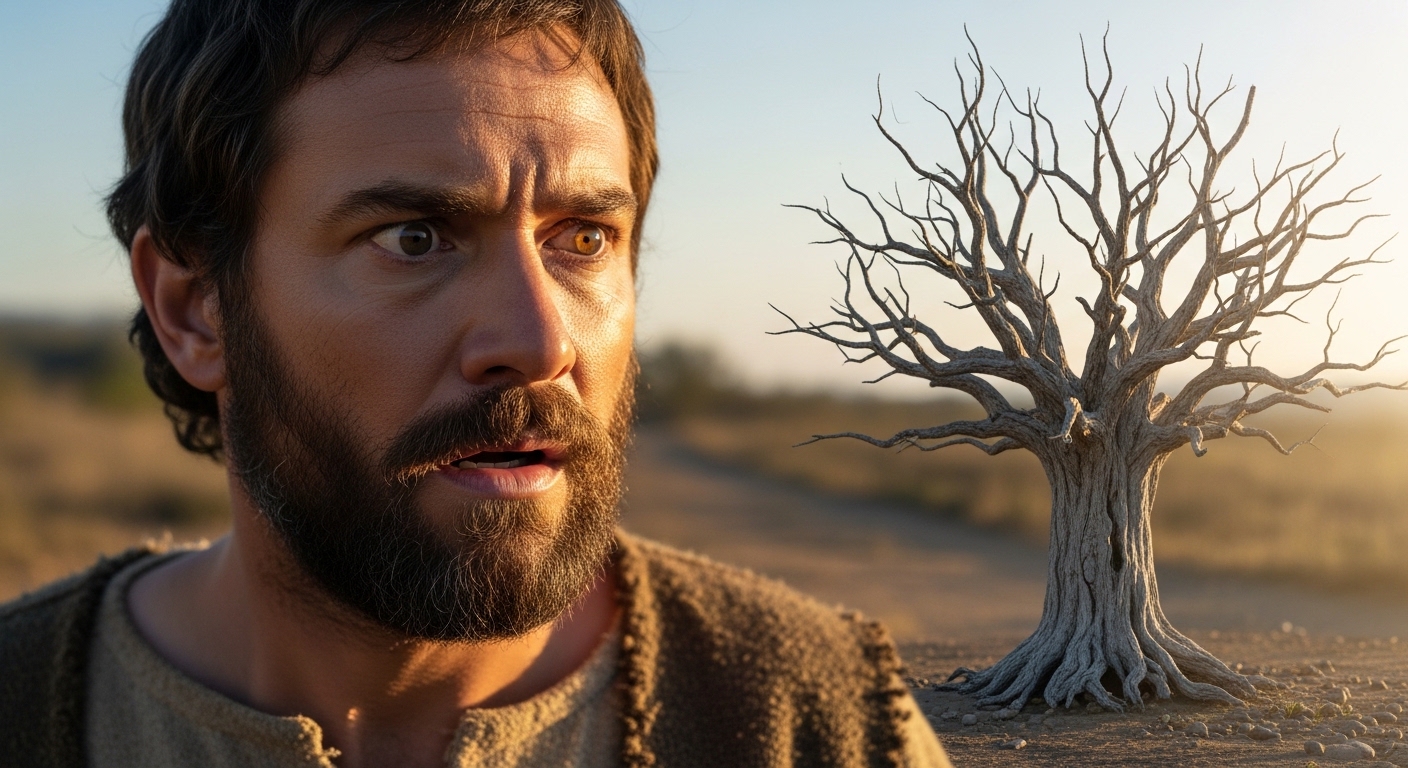
Imagine, for a moment, that your darkest secret—the one thing you swore no one would ever know, the one mistake that defines your deepest shame—was suddenly ripped out of the shadows.
Imagine being dragged from your bed, half-clothed, into the blinding light of the morning sun.
Imagine a crowd of religious perfectionists surrounding you. They aren’t looking at you with pity. They are looking at you with murder in their eyes. And in their hands, they hold heavy, jagged rocks.
You are about to die.
There is no trial. There is no defense. You are guilty, and everyone knows it. The law says you must be crushed to death, right here, right now.
But this mob isn’t just hungry for your blood. They are hunting bigger game. You are just the bait.
They are dragging you to the feet of a man named Jesus. They believe this is the moment they will finally destroy Him. They have the perfect trap. An impossible choice.
If He says, “Let her go,” He breaks the Law of Moses.
If He says, “Kill her,” He breaks the Law of Rome.
Either way, Jesus falls. And you? You are just collateral damage.
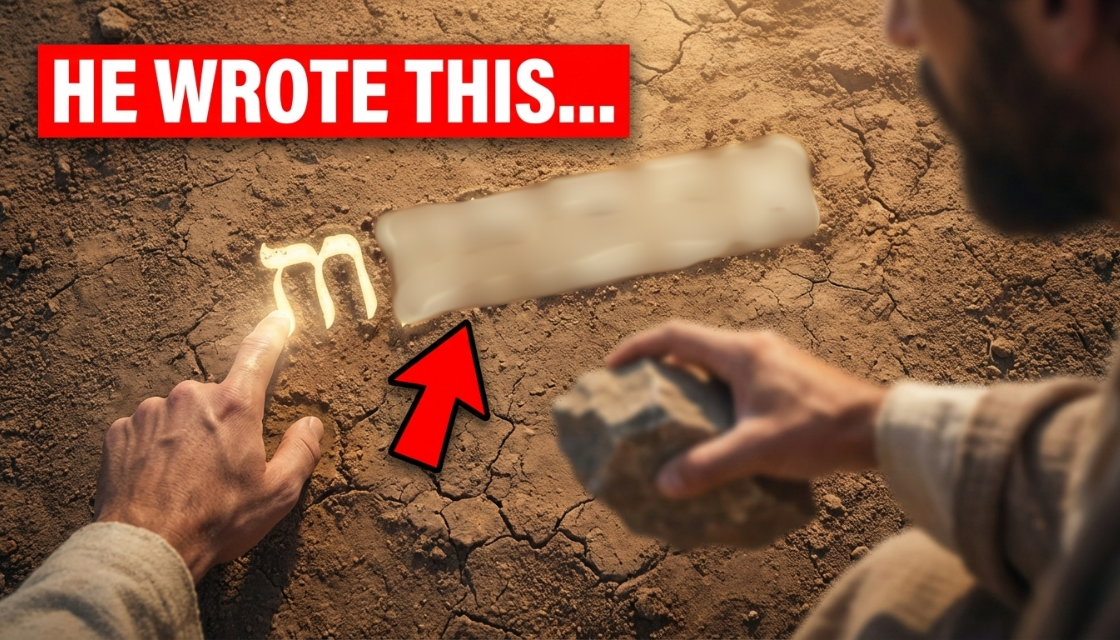
But what happens next… is something no one in history saw coming. It is a moment of silence so loud it echoes through eternity. A moment where the Judge of the Universe doesn’t speak a word… He just bends down… and writes.
What did He write in the dust that made a murderous mob drop their stones and run in fear?
Stay with me. Because by the end of this video, you won’t just see this story; you will feel it. And you will discover the shocking truth about what Jesus likely wrote that morning—a truth that might just set you free today.
To understand the terror of this moment, we have to go back. We have to understand the atmosphere in Jerusalem.
It was the Feast of Tabernacles. The city was exploding with noise, color, and people. Historians tell us that the population of Jerusalem would swell from 50,000 to over a hundred thousand during this time. Pilgrims were camping on rooftops, filling the courtyards, chanting the Psalms of ascent.
But underneath the celebration, there was a dark undercurrent. A conspiracy was brewing.
The religious elite—the Scribes and the Pharisees—were losing control. For centuries, they had been the gatekeepers of God. They determined who was in and who was out. They determined who was holy and who was unclean.
And then came this carpenter from Nazareth.
He wasn’t just healing people; He was forgiving them. He was claiming authority that belonged to God alone. He was calling out their hypocrisy, stripping away their masks, and the people loved Him for it.
Every day Jesus taught in the temple, the Pharisees felt their power slipping away like sand through their fingers. They needed to stop Him. But they couldn’t just arrest Him—the crowds would riot. They needed to discredit Him. They needed to prove, publicly, that He was a fraud.
They needed a trap. A trap so perfect, so legally binding, that even the Son of God couldn’t escape it.
And to build this trap, they needed a victim.
I want you to pause and think about the cold calculation involved here. This wasn’t a crime of passion. This was a setup.
Have you ever felt like someone was waiting for you to fail? Like there were people watching your every move, hoping you would slip up just so they could say, “I told you so”? If you’ve ever felt the weight of judgment from others, type “I have” in the comments below. Let’s support each other, because we are entering a story that confronts judgment head-on.
The Pharisees needed someone whose guilt was undeniable. Someone whose sin was so ugly, so public, that Jesus couldn’t possibly defend it without looking like a heretic.
They needed an adulteress.
Now, ask yourself this: How do you catch a woman in the very act of adultery? You don’t stumble upon that by accident. You have to be watching. You have to be waiting. You have to know where to look.
This implies spies. It implies surveillance. It implies that these “holy men” were peeping through windows, waiting for the moment of intimacy to turn into a moment of entrapment.
The sun had barely risen. The air was cool, but the tension was hot.
They kicked in the door.
Screams. Confusion. The harsh hands of strange men grabbing her.
She tries to cover herself, but they don’t let her. This is part of the punishment. Shame is the weapon.
“Adulteress!” they scream. “Whore!”
She knows the law. Leviticus 20:10: “If a man commits adultery with another man’s wife—with the wife of his neighbor—both the adulterer and the adulteress are to be put to death.”
Wait. Did you catch that? Both.
Where is the man?
The text says she was caught in the “very act.” That means the man was there, too. But the man isn’t dragged through the streets. The man isn’t facing the stones. The man is gone. Maybe he escaped? Or… maybe he was part of the setup? A pawn used to lure her in?
We don’t know for sure. But the injustice is already stinging our eyes. She is alone. She is the scapegoat.
They drag her through the winding, narrow streets of Jerusalem. The stones of the pavement scrape her feet. People are waking up, coming out of their homes. They see the Pharisees—the respected leaders—hauling a weeping woman toward the Temple.
The crowd begins to form. It grows like a wave.
Imagine her thoughts.
“This is it. I’m going to die today. I will never see my family again. My name will be cursed forever. I am nothing but my sin.”
She is paralyzed by fear. Her heart is hammering against her ribs like a trapped bird. She isn’t thinking about theology; she’s thinking about the pain of the first rock hitting her skull.
It’s a terrifying thought—being defined by your worst moment. If you are thankful that God defines you by His grace and not your mistakes, hit that LIKE button right now. Let’s get this video to 10,000 likes as a testimony to God’s mercy.
They reach the Temple courts. It’s early morning, but Jesus is already there. He is sitting down, teaching the people. The atmosphere is peaceful, filled with the words of life.
Suddenly, the peace is shattered.
The mob bursts in. They shove through the crowd of listeners. They take this terrified, trembling woman and throw her into the center of the circle.
She lands in the dust at Jesus’ feet.
Silence falls over the Temple. The teaching stops.
The Pharisees stand tall, chests puffed out, radiating self-righteousness. They have the law on their side. They have the evidence on their side. And they have the crowd on their side.
They look at Jesus, and the trap is sprung.
Listen to their words. They are sharp, precise, and deadly.
“Teacher,” they say. mocking His title. “This woman was caught in the act of adultery. In the Law, Moses commanded us to stone such women. Now, what do you say?”
Do you see the brilliance of the trap?
They are squeezing Jesus between two massive powers: The Law of Moses (Religion) and the Law of Rome (Politics).
Problem #1: The Religious Trap.
If Jesus says, “Let her go, show her mercy,” the Pharisees will tear their robes and scream, “He is a false prophet! He contradicts Moses! He doesn’t care about holiness! He loves sin!” They would discredit Him instantly in the eyes of the Jewish people. You cannot claim to be the Messiah and ignore the Law of God.
Problem #2: The Political Trap.
If Jesus says, “Stone her, execute her,” He walks right into a Roman prison. The Jews were under Roman occupation. The Romans had stripped the Jewish courts of the right to capital punishment. Only Rome could order an execution. If Jesus orders her death, He is leading an insurrection. The Romans will arrest Him for sedition.
It’s the perfect checkmate.
Mercy = Heresy.
Justice = Treason.
The Pharisees are smirking. They are waiting. The crowd holds its breath. The woman squeezes her eyes shut, waiting for the verdict.
Every eye is on Jesus.
What would you do? If you speak, you lose. If you stay silent, you look weak.
But Jesus… Jesus does something that breaks the rhythm of the entire world.
He doesn’t shout. He doesn’t quote a scripture. He doesn’t argue legal precedent.
He stoops down.
I want you to really visualize this. The King of Kings, the Creator of the Universe, sees this chaotic, bloodthirsty mob, and He lowers Himself. He gets close to the earth. He gets close to the dirt.
That is the posture of the Gospel. While we are shouting and accusing, God is coming down to our level. Not to join in the sin, but to address the heart.
He bends down. And with His finger, He begins to write on the ground.
This is one of the greatest mysteries in the entire Bible. It is the only time in scripture where we see Jesus writing.
He wrote the Law on stone tablets with His finger on Mount Sinai.
Now, He writes in the dust of the Temple floor with that same finger.
What did He write?
The Bible doesn’t explicitly tell us. And I believe that mystery is intentional. But scholars and theologians have debated this for 2,000 years, and there are three powerful theories that will chill you to the bone.
Theory #1: The Law of the Jealous Husband.
There is a strange law in Numbers chapter 5 about how to test a woman accused of adultery. It involves dust from the tabernacle floor. By touching the dust, Jesus might have been invoking this ancient trial, reminding the Pharisees that God is the judge, not them.
Theory #2: The Names of the Accusers.
Imagine this. A Pharisee screams, “She deserves to die!”
Jesus looks at him, says nothing, and writes a name in the sand: Eliab.
The man freezes. How does He know my name?
Then Jesus writes a location. The House of Sapphira.
The man’s face drains of color. He has a secret mistress at that house. Jesus knows.
Theory #3: The Ten Commandments.
This is my personal favorite.
They are quoting the Law? Okay. Let’s look at the Law.
They are shouting about the 7th Commandment: “Thou shalt not commit adultery.”
Jesus bends down and perhaps He writes the 9th Commandment: “Thou shalt not bear false witness.” (Maybe He knew they set her up).
Maybe He writes the 10th Commandment: “Thou shalt not covet.”
Whatever He wrote, it was terrifying. It wasn’t just doodles. It was a mirror.
I want to know what you think. What do you think Jesus wrote in the dirt? Was it their sins? Their names? Or something else? Pause the video right now and leave your theory in the comments. I read them all, and some of the insights you guys have are incredible.
The Pharisees are confused. They are annoyed.
“Teacher! We asked you a question! Stop playing in the dirt! Answer us!”
They keep badgering Him. They think He is stalling. They think He is cornered.
They have no idea that He is simply loading the gun that will blow their self-righteousness to pieces.
Slowly, deliberately, Jesus stands up.
He brushes the dust from His hands.
He looks them in the eye. He doesn’t look angry. He looks… disappointed. He looks at them with the piercing gaze of Truth.
And He says the words that have echoed through history.
“He that is without sin among you… let him first cast a stone at her.”
Boom.
He didn’t say, “Don’t stone her.” He upheld the Law of Moses. The Law says she deserves to die? Fine. The Law is holy.
But the Law also requires that the witnesses—the executioners—must be clean. You cannot execute justice if your own hands are covered in blood.
He changed the trial.
A moment ago, the woman was on trial.
Now? The judges are on trial.
“He that is without sin.”
The Greek word used here doesn’t just mean “never made a mistake.” It implies, “He who is without this sin.” Or perhaps, “He who is spiritually whole.”
Jesus effectively said: “You want to be the executioner? Go ahead. But to be the executioner of God’s law, you must be as perfect as God’s law. So, if you have never lusted, never lied, never manipulated, never hated… step forward. Pick up that rock. And throw it.”
And then… He does it again.
He stoops back down. He goes back to writing.
This is the ultimate power move. He doesn’t stare them down. He doesn’t wait for their answer. He dismisses them. He leaves them alone with their conscience and with God.
The silence returns. But this time, it’s different. It’s heavy.
The oldest Pharisee, the leader of the mob, looks at the rock in his hand. It feels heavy now. He looks at the writing in the dust. He looks at the trembling woman. And he remembers his own youth. He remembers the things he did in the dark.
He realizes: If I throw this stone at her, God will throw a mountain at me.
Clack.
The first stone hits the pavement.
The old man turns and walks away. He cannot bear the light.
Then the next one.
Clack.
And the next.
Clack. Clack.
It is the sound of grace. The sound of judgment being disarmed.
The text says, “They went out one by one, beginning with the eldest.” Why the eldest? Because they had the most past to remember. They had the most sins to count.
One by one, the mob dissolves. The anger evaporates. The square empties.
Until there are only two people left.
The Great Sinner.
And the Great Savior.
You are halfway through this story, and the best part is coming up. The conversation that changes everything. If you are enjoying this deep dive into the Bible, please Subscribe to the channel. We are on a mission to bring scripture to life for millions of people, and your subscription helps us do that. Click the bell so you never miss a story.
https://www.youtube.com/@WiseBibleStories.Official
The noise is gone. The dust is settling.
The woman is still curled up on the ground, waiting for the blow that never came. She has her eyes squeezed shut. She hears footsteps walking away. She is confused.
Finally, she hears a gentle voice.
“Woman, where are they? Has no one condemned you?”
She slowly lifts her head. She looks around. The accusers—the men who wanted to kill her—are gone.
She looks up at Jesus. For the first time, she looks into the eyes of God.
And she doesn’t see anger. She doesn’t see disgust.
She sees a love she has never known in the arms of any man she has ever been with.
“No one, Lord,” she whispers.
Notice she calls Him “Lord.” In this moment, she isn’t just saved from death; she is meeting her Messiah.
And then, Jesus speaks the verdict of Heaven.
“Neither do I condemn you.”
Stop.
Do you understand the weight of that sentence?
The Pharisees couldn’t condemn her because they were sinners.
Jesus could have condemned her because He was sinless.
He was the only one in that circle who had the right to throw the stone! He was the only one without sin! He held the moral high ground. He held the power of judgment.
But the only One who could throw the stone… chose not to.
Why? Was He soft on sin? Was He saying adultery doesn’t matter?
Absolutely not. Jesus hates sin. He knows sin destroys us.
But He knew something else. He knew that shortly after this day, He would climb a hill called Calvary. He knew that the punishment this woman deserved was about to be placed on His own shoulders.
He didn’t say, “You are innocent.”
He said, “I do not condemn you.”
Why? Because He was going to be condemned for her.
The stones that should have crushed her were about to crush Him.
But He doesn’t stop there. Grace is not just “letting you off the hook.” Grace is empowerment for a new life.
He says: “Go, and sin no more.”
This is the perfect balance of the Gospel.
Grace: “Neither do I condemn you.”
Truth: “Sin no more.”
Religion says: “Change your life, and then I will accept you.”
Jesus says: “I accept you… now go change your life.”
He gives her a future. He gives her a clean slate. He gives her dignity back.
She walked into that circle a whore. She walked out a daughter.
This story isn’t just about a woman 2 thousand years ago. It’s about us. Today.
There are two people you might identify with in this story.
- Maybe you are the Pharisee.
Maybe you are holding a stone right now. Is there someone you are judging? Someone you are angry with? Someone whose sin looks “worse” than yours?
Maybe you feel superior because you go to church, or you don’t drink, or you don’t cheat.
But Jesus is writing in the dust of your heart today. He is asking, “Are you without sin?”
Drop the rock.
Let it go.
Judgment belongs to God. Mercy belongs to you.
- Maybe you are the Woman.
Maybe you feel like you’ve been caught. Maybe your shame is public, or maybe it’s private, burning a hole in your soul.
Maybe you feel like you are surrounded by accusers—voices in your head telling you that you are worthless, dirty, unlovable.
Maybe you are waiting for the punishment to fall.
If that is you, listen to me.
Look up.
The accusers have no authority here. Only Jesus does.
And He is saying to you, right now, through this video: “Neither do I condemn you.”
You are not your past. You are not your mistake. You are not your addiction.
You are who He says you are. And He says you are forgiven.
But He also loves you too much to leave you there. He says, “Go and sin no more.”
Leave that destructive relationship. Leave that habit. Walk away from the life that is killing you, and walk into the life He has for you.
I want you to imagine dropping that heavy burden you’ve been carrying. Imagine it hitting the ground just like those stones. Clack.
If you are ready to receive that forgiveness, or if you are ready to forgive someone else, I want you to type “Set Free” in the comments section. Let that be your declaration today.
The woman left that temple changed forever. The Pharisees left convicted. And the crowd left amazed.
Jesus proved that day that He didn’t come to destroy the law, but to fulfill it through love. He proved that no pit is so deep that His grace cannot reach down and pull you out.
But this wasn’t the only time Jesus shocked the world.
If you thought this story was powerful, you need to hear the story of the man possessed by a Legion of demons—a man so terrifying that an entire town was afraid of him. Until he met Jesus.
What happened on that cliffside will make your hair stand on end. You don’t want to miss that video.
And remember, no matter what you’ve done, if you bring it to Jesus, you leave with Grace.