Before the mountains knew their modern shapes, before the oceans tasted of salt the way they do now, there was a world. A world so vibrant, so teeming with life, yet so utterly consumed by darkness that the very heart of God was grieved.
This is not just the story of Noah. It is the story of the end of everything you thought you knew. It’s the truth behind the greatest extinction event in history—the one where eight souls survived.
But tonight, we are going to talk about the ones who did not.
We are going to talk about the creatures that God specifically did not allow to enter Noah’s Ark, and the reason why they were denied a place will shock you to your core.
You think you know the roster: two by two, the majestic and the meek. But there were entire categories of life—some familiar, some monstrous, and some utterly mysterious—that came to the towering vessel and were met, not with a welcoming plank, but with an absolute, terrifying rejection.
What were they? Why were they denied? Was it a lack of space? A bureaucratic oversight? No. The reason is a profound theological truth about the nature of purity, corruption, and the judgment of a Holy God. It reveals the true, horrifying purpose of the Flood.
Stay with me, because this story—and its ultimate secret—is about to change how you read the Book of Genesis forever.
Imagine the Earth, circa the six hundredth year of Noah’s life. The air was thick, not just with humidity, but with iniquity. Men lived for centuries, their wickedness blossoming over generations like a toxic bloom. Violence was not an act; it was the atmosphere.
The sons of Adam had become reckless, fusing the sacred with the profane. Their hearts, Genesis tells us, were only evil continually.
But the truly unsettling element of this age was the rise of the Nephilim. The Giants. The ‘Fallen Ones.’
They were the monstrous progeny, the physical manifestation of the angelic realm’s illicit descent, mingling the spiritual with the mortal. They stalked the forests and plains, their laughter echoing a mockery of God’s perfect design. They were not creatures in the sense of ‘beasts of the field,’ but a hybrid, a corruption of the very fabric of life.
Noah, the righteous man, watched this unfold. He lived in a small pocket of grace, surrounded by a civilization that mocked his piety and his impossible, staggering project: The Ark.
Now image the internal Monologue Noah had:
“The wood is heavy. The sun is hot. The laughter is relentless. They call me madman. They call me fool. But the fear… the fear is colder than the rain they cannot yet imagine.”
He knew the command: build a floating city, three hundred cubits long. Fill it with food. And gather the creatures. Every clean beast by sevens, and the beasts that are not clean by pairs.
But as the mammoth vessel took shape—a four-story behemoth of gopher wood and pitch—Noah began to notice a terrible, creeping realization about the world around him. He saw life that defied the categories, forms that twisted the original divine blueprint. These were the first creatures he instinctively knew God would not allow—because they were the reason for the judgment itself.
This world was contaminated. And the time to cleanse it was running out.
But what about the creatures that were innocent, yet still denied? The ones who arrived at the Ark’s ramp, pleading with their wild eyes, only to be turned away? That story is about to unfold. First, I have a request for you…
If the gravity of this moment, the sheer scale of God’s righteousness and judgment, resonates with your spirit, please take a moment right now and hit that like button. It helps more people hear this powerful, epic truth. And if you are moved by Noah’s lonely faith, type amen in the comments right now. Let’s stand with him.
For one hundred years, the hammer was Noah’s voice. The sight of the Ark—a ship the size of three modern ocean liners, impossibly far from any sea—was a testament, a sermon carved in timber.
The world ignored it. They saw a man obsessed, wasting away his centuries on a ridiculous project. They scoffed at the very notion of a global flood, a catastrophic end to their sun-drenched, carefree, and violent existence.
But Noah worked because the command was clear. And the command regarding the creatures was hyper-specific. God did not say, “Take two of everything that moves.” He said, “Of every living thing of all flesh… to keep them alive with thee.”
The key words are flesh and alive.
As the final year dawned, a silence began to fall upon the land. The mocking voices grew fainter, replaced by a strange, anticipatory quiet. And then, the procession began.
Imagine the scene: chaos transformed into communion. Noah and his family stood at the massive, singular door, mere gatekeepers to a phenomenon they could barely comprehend. They didn’t have to hunt or chase. The creatures came, instinctively sorted after their kind.
But then, the anomalies began to appear. The creatures that did not fit the divine mandate.
The first, and most numerous group, were the Creatures of the Deep.
Wait, you might be thinking, weren’t the fish safe? Wasn’t the Ark meant for the land? Yes, but the sheer number of land-based, semi-aquatic animals that tried to enter—creatures with lungs that breathed the air, yet lived predominantly in the water—was staggering.
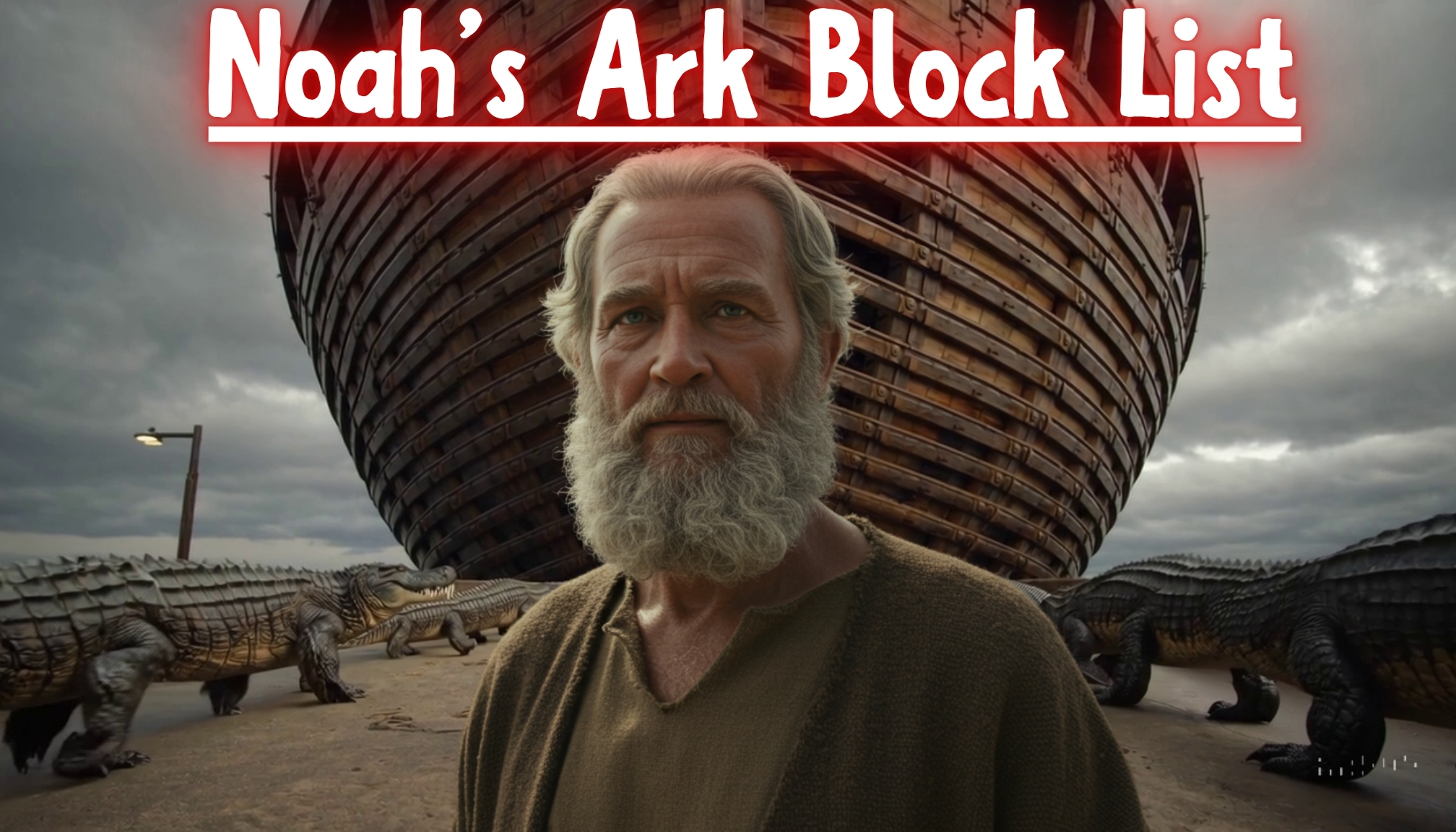
Noah saw the crocodiles and alligators, the colossal sea turtles and the ancient hippopotamuses. They approached the ramp, their massive forms lumbering, their eyes perhaps showing confusion.
They were land animals, in essence. They had the breath of life in their nostrils. Why weren’t they chosen to enter? Why, after all the effort, did Noah and his sons stand at the ramp and wave off the mighty reptile?
This brings us to The First Surprising Reason God denied entry to certain creatures.
The Ark was not merely a lifeboat. It was a Preserver of Terrestrial Order. It was a mobile, sealed environment designed to protect land-based life from a specific, overwhelming agent of destruction: fresh water and submersion.
The creatures of the deep—the great whales, the deep-sea fish, the teeming schools of the ocean, and the most robust of the semi-aquatic beasts—were already in their natural domain of safety. They were designed to thrive in the condition that would destroy the land.
Noah was commanded to save the “living things of the land.” To take a hippo, for example, would have been redundant, and in fact, a logistical nightmare! The Ark was for the vulnerable. It was for those whose existence was threatened by the new environment.
The hippo, the crocodile, the massive turtles—they were met with a silent, profound rejection because they did not need God’s rescue in the same way. Their design already held the promise of survival in the Flood. The judgment upon the land was their survival.
(Thought-Provoking Question): Think about that. What would you do if you came seeking refuge, only to realize that the circumstances you feared were actually your greatest defense?
This realization should anchor a powerful truth: God’s plan of salvation is tailored and perfect. He doesn’t save everyone in the same way. He provides the exact path necessary for each circumstance.
If This Concept—That God’s Plan Is Customized For Every Single Creature—Inspires A Sense Of Awe In You, Then You Know What To Do: Subscribe Right Now And Ring That Bell Icon 🔔 So You Never Miss Another Deep Dive Into The Hidden Truths Of Scripture.
But the most shocking rejections were still to come. They were the creatures that desperately wanted to enter, but were turned away because of who they were, not because of where they lived.
The rain was still but a whisper on the horizon, yet the darkness had begun to gather at the edges of the Ark’s light. Noah’s job was to admit life; but his greater task was to exclude corruption.
Remember the Nephilim? The giants who polluted the Earth? Their presence was a sign that the very genetic code of the world had been compromised.
And this is where the story gets truly terrifying.
The animals that approached the ramp were categorized “after their kind”—meaning, they fit the biological blueprint God had originally established. A horse was a horse, a sheep was a sheep. Pure strains of created life.
But what about the things that weren’t?
In the generations before the Flood, the line between beast and corruption had blurred. The fallen angelic influence was not limited to human beings; it may have affected the animal kingdom, breeding hybrids and chimeras—unnatural, sentient creatures whose DNA screamed of distortion.
These creatures, sometimes referred to in non-canonical texts as the “Monsters of the Pit,” approached the Ark. They were creatures of flesh, yes, but their essence was unholy mixture.
Noah did not need a ledger or a scientific breakdown. He had the Spirit of God directing him. As these unnaturally large, or strangely formed, or aggressively malevolent creatures stepped onto the ramp, the air around the Ark would grow cold. The other animals would recoil. And Noah would simply lower his arm.
Image the dialogue – Noah to his son Shem, perhaps:
“Do not look into its eyes, my son. It breathes air, yes, but it does not carry the spark of the first Creation. It is a wound upon the Earth. Its ‘kind’ is chaos, and chaos has no place in the new world.”
The Second Shocking Reason for Denial: The Ark was a Sanctuary of Genetic Purity. The Flood was a global, catastrophic act of decontamination. If God allowed a single corrupted strain, a single Nephilim or a single chimeric beast to enter, the entire purpose of the judgment would be lost.
The Ark was not just saving life; it was saving the definition of life—preserving the integrity of creation after their kind. Every creature rejected for being a hybrid or corrupted form was being denied because they were part of the problem, the evidence of the world’s incurable sickness. They were the carriers of the contagion of sin in the natural world.
This truth—that God must separate the pure from the corrupt—is the same principle that will eventually shock you in the New Testament when we see where this rejected lineage is finally dealt with. But first, let’s explore the most powerful rejection of all: the spiritual beings who were denied the Ark.
Before we continue into the spiritual realm, ask yourself: What are the hybrid influences in your own life that need to be cleansed? What parts of your heart are not truly after their kind—not truly God’s pure design? Comment your thoughts below, and let me know where you are watching from—it’s powerful to know we are sharing this message around the world.
The judgment of the Ark was directed at all flesh, in which is the breath of life. This definition automatically excludes the spiritual entities: the fallen angels, the spirits, and the demons that had infested the Earth.
These were the true architects of the corruption. They had seen the Ark rise, and they knew what it represented: the triumph of God’s plan over their anarchy.
They didn’t approach the ramp seeking refuge. They approached it seeking access.
Imagine the scene from their perspective. The Fallen Ones, the spirits of the Nephilim (the Rephaim, or perhaps the “wandering spirits” later spoken of), could not be killed by water. They are unbound by the physical mortality of flesh.
But they were denied entry to the sacred space.
The Ark, sealed by divine pitch and marked by the faith of Noah, was a bubble of sacred time and space. It was an unblemished sanctuary floating in a world of total impurity.
When a creature, visible or invisible, attempted to cross the threshold, they were met with the absolute, tangible Holiness of God.
For the spiritual beings, the rejection was not a physical turn-away, but a barrier of divine fire. The air itself was repellent. They could circle, they could rage, they could whisper terrible lies to the terrified humans outside, but they could not breach the spiritual firewall protecting the remnant.
The Third Surprising Reason for Denial: Spiritual beings were excluded not because the Ark couldn’t hold them, but because they are not subject to the Flood’s physical judgment, and were excluded from the spiritual redemption represented by the Ark. The Flood was their temporary prison and confinement, not their death. Their ultimate judgment was reserved for another time. The Ark was the seed of the future Earth; they had no claim on it.
This is a moment of deep spiritual reflection. The same divine barrier that kept corruption out of the Ark is the same barrier—the Holy Spirit—that keeps the darkness out of the life of a believer today. The Ark was a foreshadowing of Christ as the sanctuary.
Pause for a moment. If the Ark is the symbol of God’s refuge, how guarded is the door of your own heart? Are you allowing any of the spiritual corruption of the fallen world to creep into your safe space? The Ark’s door was a one-way path to salvation, and that gate remains open for us today.
The time for the gathering was complete. One hundred years of building, perhaps days of the animals processing, and then… silence. Noah’s family was inside. Eight souls. And the countless species of the Earth, categorized and protected.
The outside world still mocked, but their laughter was brittle. The clouds that had begun to gather were not the usual summer showers. They were darkness made manifest.
And then came the moment when the last, desperate wave of living creatures arrived. These were the ones who were pure after their kind, but were still denied.
Wait, how could pure, created, land-based life be denied entry? The scripture is clear: Noah took two of every non-clean kind and seven of every clean kind. What could possibly be left?
We must consider the creatures that came too late.
The Ark’s entry was a divine appointment, not a free-for-all. God didn’t rely on Noah to set the watch; the animals came by command. Yet, within the narrative of the Flood, we understand that human beings—and likely, their associated creatures—were given a deadline.
Imagine the domesticated animals of the wicked. The oxen that pulled the plows of the scoffers, the sheep that grazed on the land of the Nephilim’s followers, the household pets that provided comfort to those whose minds were only evil continually.
They were innocent. They were of the correct kind. But they were anchored to the condemned.
The Fourth Shocking Reason for Denial: They were denied entry because they were too deeply integrated into the structures of the old world. Their owners, their masters, had failed the test of faith. And in the totality of God’s judgment upon the wicked civilization, even the collateral beauty tied to that civilization had to be judged.
This is the fear of missing out, the spiritual FOMO, on a cosmic scale. The judgment upon the masters swept away the innocent servants. This detail underscores a terrible reality: the choices of the leader dictate the fate of the dependent.
Noah could hear the approaching thunder, but more terrifying than the storm was the sound of the final, decisive action that was about to take place—the action only God could perform.
If this story is opening your eyes to the detail and seriousness of God’s plan, let this be your final call: Don’t miss the end of this incredible story! subscribe now and let this knowledge transform your view of scripture! Also, share this video with one person who needs to understand the gravity of biblical events.
The final act of preparation was not performed by man. Noah and his family were inside, terrified, listening to the mounting panic outside. They were secured, but the door remained, a massive, unsealed barrier.
Genesis 7:16 tells us a crucial, terrifying detail: “And the Lord shut him in.”
This was the final, definitive exclusion.
At that moment, the final rejection was solidified.
Outside the now-sealed Ark stood the greatest creature of all who was denied entry: Man.
Man was a creature—created in the image of God, made of flesh and possessing the breath of life. Man was invited for 100 years. Man was given the chance to observe the building, to hear the warnings.
But when the divine seal was applied, the reason for man’s denial became chillingly clear: Man had forfeited his ‘kind.’ He had contaminated his own image.
The Nephilim were the literal corruption; the wicked men and women were the spiritual corruption. They were denied, not because they were the wrong species, but because they had rejected the divine call to righteousness. They had chosen the kind of wickedness over the kind of faith.
The reason God shut the door was not to keep the rain out—it was to keep Judgment in, and Corruption out.
Think of the panic. The sheer, gut-wrenching realization of the people outside. Their mockery turned to terror. They beat against the walls, they screamed Noah’s name, not because they suddenly believed in God, but because they suddenly believed in the consequences of their disbelief. They were denied entry not by lack of space, but by lack of time, faith, and purity of heart.
The Final and Most Profound Reason: All creatures not allowed to enter—the chimeras, the late-comers, the spiritual specters, and the wicked men—were united by one common trait: They represented the old, condemned world.
The Ark was a preview of resurrection and new creation. Only those beings (both animal and human) capable of receiving a new start, those not irrevocably corrupted, were allowed to pass through the watery death into the renewed life. The rejected were simply those who had chosen the path of unrepentant death.
The rain began now, not as drops, but as a descending ocean. And in the darkness, floating away from the land he had judged, Noah had one final, haunting realization about what the storm truly meant for the world outside his wooden sanctuary…
The storm was a nightmare made real. The fountains of the great deep burst forth, and the windows of heaven were opened. It was a baptism of destruction—the world submerged beneath the fury of water from below and above.
Inside the Ark, it was terror and faith in equal measure. The sounds were horrifying: the creak of the gopher wood, the roar of the water, the terrifying, muffled cries of the world outside.
Noah, however, was witnessing the purpose of the rejections playing out in real time.
The creatures of the deep—the whales, the massive fish—were not struggling; they were thriving. They swam over the highest peaks, their deep-sea forms untouched by the violence on the surface. God had preserved them by omission. They were the proof that God saved through tailoring the refuge to the threat.
The Nephilim and the unrepentant masses? Their screams faded into the deluge. The water was not just killing them; it was erasing the corruption. The great bodies of the giants, the very physical evidence of the unholy mingling, were swept away, removed from the new world’s soil.
And the spiritual forces? They were forced to watch. The spirits of the giants—now disembodied, demonic entities—found themselves without anchor, confined to the judgment, unable to touch the sacred space of the Ark. Their rejection was their confinement.
The story of the Flood is not about a God who is capricious. It is about a God who is just. He provided a way of escape—the Ark—for all who would submit to His terms. He was not arbitrary in His rejections; He was precise in His cleansing. Every creature denied entry was a creature that either did not need the Ark or could not be purified by it.
This is a deep lesson on redemption. We must allow God to distinguish between the necessary parts of our lives and the corrupted parts we must surrender to the water of judgment.
If this powerful connection between the Flood and the need for spiritual cleansing has moved you, please drop a Prayer Hands Emoji in the comments right now. This is a story of miracles, and we believe in miracles!
The waters prevailed for 150 days. The Ark sailed on the surface of the drowned Earth, a silent testament to the power of faith and the totality of judgment.
Then came the stillness. The drying. The Ark landed upon the mountains of Ararat.
After a year and ten days—a time capsule of judgment and survival—the door was opened. And this time, it was Noah who was commanded to open it.
The creatures streamed out, after their kind, onto the newly washed, pristine soil of the Earth. They were the remnant, the pure, the preserved. The animals that had been denied entry—the hybrids, the contaminated, the defiant—were gone. Their kind was extinguished from the face of the Earth.
The most shocking reason for the denial of the Nephilim and the wicked men was this: God did not save them because He intended to end their line entirely. The preservation of life required the extinction of corruption.
Noah built an altar. He offered sacrifice. And God established His covenant.
The rainbow was the sign: never again would God destroy all flesh with a flood.
But the story doesn’t end there. It simply changes the method of judgment. The Ark of Salvation remains open, but now it is Christ Himself. The rejection of the corrupted is still in play, but now the corruption is addressed through redemption and repentance, rather than global deluge.
If you loved this deep dive into the secrets of the Ark, wait until you hear the story of The Tower of Babel—the chilling tale of how the descendants of Noah tried to climb back into the heavens and what God did to stop them. It’s a story of ambition, language, and a stunning architectural downfall that you won’t want to miss.
Thank you for reading. May the gravity of God’s Word anchor your soul.
If this story moved you, type Amen one last time.